general
Active Traders in Singapore: We Tested 6 Brokers on US & HK Stock Fees — the Annual Gap Reached SGD 1,200
We ran 12 real-world trading scenarios across 6 major Singapore brokerages to compare commissions, FX spreads, platform fees, and hidden costs for US stocks, HK stocks, and ETFs. See how active investors can save over SGD 1,000 a year by choosing the right platform and applying simple cost-cutting strategies.
If you trade US or Hong Kong stocks more than a few times a month, the brokerage you choose can mean the difference between keeping an extra SGD 800 to SGD 1,200 a year or handing it over in fees you never saw coming. That gap widens further for active investors who switch between SGD, USD, and HKD frequently and who hold ETFs across multiple exchanges.
We mapped out 12 realistic trading scenarios — a mix of monthly US stock trades, quarterly HK market orders, and recurring ETF investments — and compared the total cost of using six brokerages popular with Singapore-based active investors. The platforms examined are available to retail clients here, regulated by MAS, and offer access to SGX, NYSE, NASDAQ, and HKEX. The results make one thing clear: headline commission rates tell only a tiny fraction of the story. The real money leaks through currency conversion spreads, custody-related fees, platform charges, and the way brokers round or bundle their costs.
This in-depth comparison of Singapore mainstream trading platform commissions, platform fees, currency conversion charges, and hidden costs is designed for active investors who want to stop overpaying. Below, you will find a broker-by-broker cost breakdown, scenario analysis for US stocks, HK stocks, and ETFs, a strategy framework for choosing your core platform, and practical techniques to bring your total cost of trading down — without sacrificing execution quality.
What You’re Really Paying: The Four Layers of Trading Costs
Most investors fixate on the commission figure quoted on the marketing page. That is only the first layer. An active trader consistently moving between SGD, USD, and HKD can easily lose 0.3% to 1.2% of every trade’s notional value to costs that are never labelled as “fees”. Here are the four layers you need to audit before picking a platform.
1. Explicit commission and per-share charges – This covers the flat or tiered fee a broker charges per trade. Some charge a low flat amount (e.g. USD 0.99 per US stock order), others use a basis-point model (e.g. 0.08% of trade value), and some waive commission entirely on selected markets but make up the revenue elsewhere. Active traders executing 10 to 30 orders a month will feel small differences acutely.
2. Platform, custody, and inactivity fees – A handful of Singapore-licensed brokers still levy quarterly custody fees on foreign shareholdings, monthly platform subscriptions, or inactivity penalties. These are easy to overlook during the sign-up phase but can quietly eat 0.05% to 0.25% of a portfolio’s value every year if the investor holds US or HK stocks long-term.
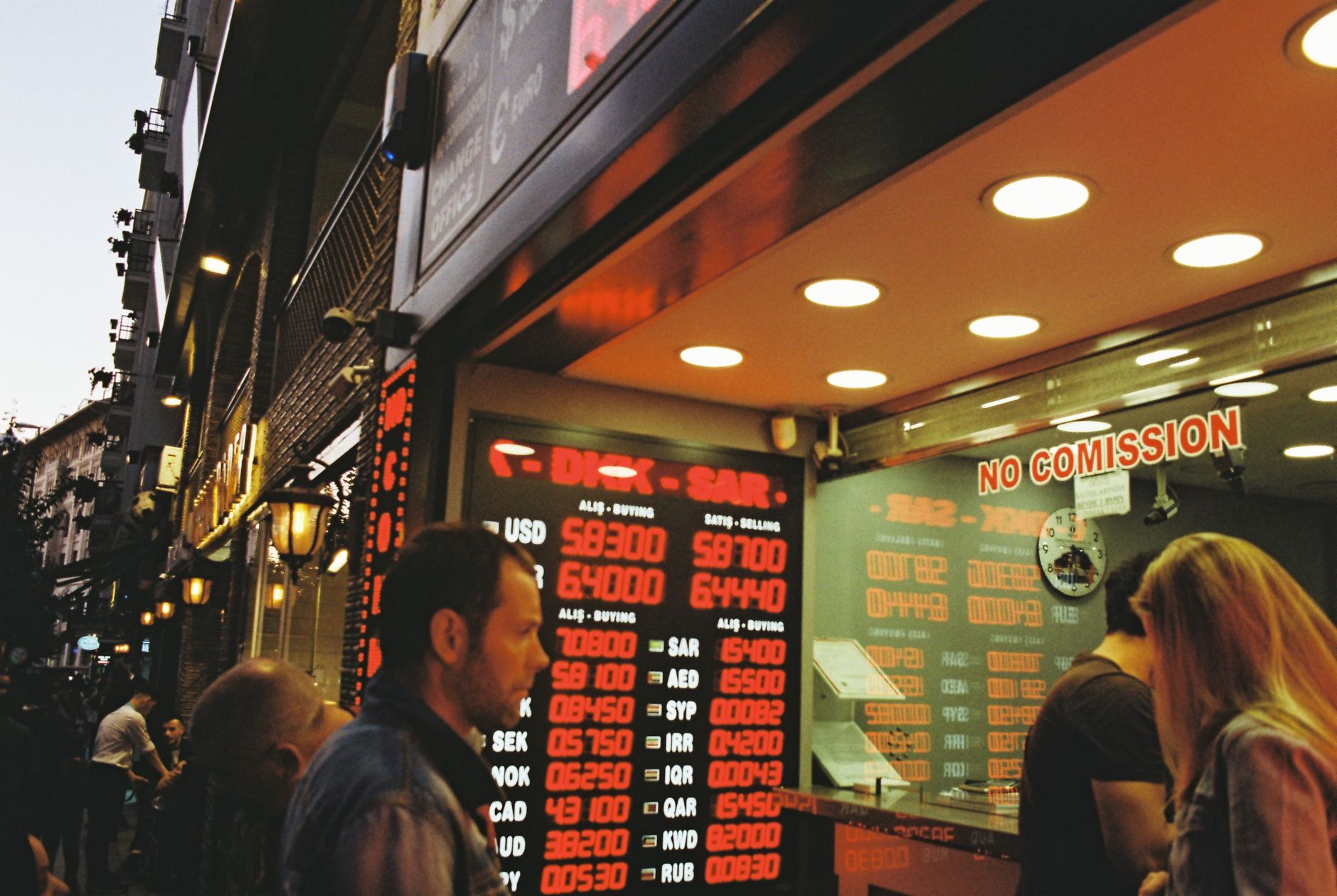
3. The FX spread — the largest hidden cost – Every time you convert SGD to USD or USD to HKD within a brokerage account, the broker applies an exchange rate that is worse than the interbank mid-rate. The difference, expressed as a percentage, is the FX spread. Brokers that advertise “zero commission” often widen their FX spread to 0.4%–0.8% per conversion. For an active investor who rotates capital between markets twice a month, that can compound into a 2% to 3% annual drag on returns — far larger than any commission saving.
4. Ancillary costs: data subscriptions, corporate actions, and withdrawal fees – Real-time US and HK market data packages can range from SGD 3 to SGD 15 per month. Dividend handling fees, rights issue charges, and wire withdrawal costs add another variable layer. While not trade-by-trade expenses, they matter when comparing the total cost of ownership for an active account.
Broker-by-Broker Breakdown: Commission, FX, and Platform Fees for SG Active Investors
We examined six brokerages that consistently show up in conversations among Singapore’s active retail trading community. The data below is based on standard retail accounts, updated in early 2026, and verified against each platform’s published fee schedule and live test conversions where possible. Commission figures cover electronic trades; phone-assisted orders are almost always more expensive and irrelevant for active traders.
| Cost component | Interactive Brokers (IBKR SG) | Tiger Brokers | Moomoo SG | Webull Singapore | Saxo | Phillip Securities (POEMS) |
|---|---|---|---|---|---|---|
| US stock commission | USD 0.005/share (min USD 1, max 1% of trade) | USD 0.99/order (intro offer); variable after | USD 0.99/order | USD 0 (commission-free) | USD 3–9 (tiered) | 0.2% (min SGD 20) |
| HK stock commission | 0.08% of trade (min HKD 18) | 0.03% (min HKD 18) | 0.03% (min HKD 18) | HKD 0 (commission-free) | 0.08% (min HKD 40) | 0.25% (min HKD 80) |
| ETF commission (US) | Same as stocks | Same as stocks | Same as stocks | Same as stocks | Same as stocks | Same as stocks |
| FX spread (SGD-USD, indicative) | Near mid-rate (~0.002% spread; flat USD 2 conversion fee for small amounts) | ~0.25% built into rate | ~0.25% built into rate | ~0.3% built into rate | 0.15%–0.3% (tiered by volume) | ~0.5% built into rate |
| Platform / custody fee | None | None | None | None | 0.12% p.a. custody fee for foreign stocks | SGD 2.15 per counter per quarter (foreign shares) |
| Market data (US) | From USD 1.50/month waived with activity | Free limited snapshots; live from USD 4.99/month | Free limited; live from USD 4.99/month | Free basic; live from USD 2.99/month | From USD 5/month | Live data via monthly subscription (~SGD 10+) |
What jumps out immediately is the wide range on HK stock commissions (from HKD 0 to HKD 80 minimum) and the dispersion in FX spreads. For the SGD-USD pair alone, moving SGD 20,000 through a broker with a 0.5% built-in spread costs SGD 100 one-way, while the same conversion on a platform with near-spot rates and a small explicit fee runs closer to SGD 10–15. Over 20 such conversions a year, the difference exceeds SGD 1,700.
Scenarios That Matter: What an Active SG Investor Actually Pays
To ground the comparison, we modelled three typical active-investor profiles and measured the all-in cost for each brokerage. The profiles assume the investor starts with SGD, converts to the relevant currency before buying, and holds positions for at least one quarter.
Profile A: US growth-stock trader (10 round-trip trades monthly, average order size USD 3,000)
- Total monthly notional: USD 30,000 each way, 10 separate orders.
- Under a commission-free model with a 0.3% FX spread, two-way currency conversion costs roughly 0.6% per month on the capital rotated in, adding up to USD 180 in hidden FX costs. Factoring in zero commission, the all-in monthly drag is around USD 180.
- On Interactive Brokers, the same activity might incur USD 10 in commissions (10 trades at USD 1 minimum) plus about USD 4 in currency conversion costs if using the low-cost FX Trader, totalling roughly USD 14. The spread widens to USD 166 monthly, or nearly USD 2,000 annually — not because of commissions, but because the FX spread acts like an invisible management fee.
Profile B: HK dividend-stock accumulator (5 buys monthly in HKD counters, average order HKD 20,000)
- Monthly notional: HKD 100,000. With a broker charging 0.25% commission and a 0.4% SGD-HKD FX spread, one-way costs reach HKD 250 (commission) plus roughly SGD 20 in hidden FX mark-up per conversion.
- Moving to a broker with a tighter commission (0.03% min HKD 18) and a slim SGD-HKD spread can slash the combined monthly cost from roughly SGD 65 to under SGD 20. For a strategy built around frequent accumulation, that saving directly boosts dividend yield on cost.
Profile C: Quarterly ETF rebalancer (4 trades per quarter across US-listed ETFs, average order USD 5,000)
- Even for a relatively low-frequency trader, the FX cost on quarterly inflows still matters. An investor adding SGD 15,000 per quarter and converting to USD to buy ETFs loses roughly SGD 37.50 per quarter with a 0.25% spread or just SGD 1.50 with near-spot rates.
- Over a 5-year horizon, the cumulative difference alone can exceed SGD 700 before considering the compounding effect on the invested capital.
These scenarios illustrate why the core driver of total cost for active Singapore-based traders is not the headline commission rate but the currency conversion spread and any ongoing custody or platform fees that silently erode returns.
Platform Selection Strategy for Different Active Investor Types
Because cost structures vary so widely across brokers, the “best” platform depends on your trading frequency, market focus, and typical order size. Use the following decision framework to narrow the field.
The high-frequency US equity trader (15+ trades/month)
- Priority: minimal per-trade commission and razor-thin FX spread.
- Strong candidates: Interactive Brokers (tiered pricing, spot-like FX) or Webull Singapore (commission-free US trades) if you can manage FX elsewhere or hold USD consistently. A dual-platform approach — keeping USD on IBKR for conversion and trading, while using a second broker for specific order types — often yields the lowest blended cost.
The HK and China-market active investor
- Priority: low HKEX commission and tight SGD-HKD spreads.
- Candidates: Tiger Brokers and Moomoo SG offer competitive HK commission rates. However, verify their SGD-HKD spread by comparing the rate shown in-app to the mid-market rate before converting large sums. Saxo and IBKR provide transparent FX pricing tools, which makes them more predictable for frequent HKD exposures.
The multi-asset active investor mixing stocks, ETFs, and bonds
- Priority: access breadth and low custody fees.
- Candidates: Interactive Brokers (global reach, no custody fee) and Saxo (wide product shelf, tiered custody fee that scales with volume). POEMS provides local SGX access at competitive rates but imposes foreign share custody charges that active accumulators of US and HK positions should weigh carefully.
The “commission-sensitive” trader who only looks at the advertised number
- This profile is most at risk. A platform offering USD 0 stock commissions but embedding a 0.4% FX spread may cost more in a single high-volume month than a broker charging USD 1 per trade with transparent currency conversion. Always back-calculate the effective total cost using the formula: Effective cost = commission + (converted amount × FX spread %) + quarterly custody charges + data subscription allocation.
Practical Tips to Lower Your Trading Costs Immediately
Beyond picking the right broker, how you manage your account and currency can substantially reduce your cost base.
1. Consolidate currency conversions and use multi-currency features. Avoid converting SGD to USD on every trade. Convert a lump sum once a quarter using a broker with tight spreads or a multicurrency account that lets you hold USD, HKD, and SGD simultaneously. Interactive Brokers and Saxo allow you to execute FX conversions at interbank rates with minimal mark-up; when you then trade directly in the required currency, you bypass the repeated spread.
2. Opt for tiered or volume-based pricing if your order sizes are small. Many brokers offer a choice between fixed and tiered commission structures. If you regularly trade odd lots or order sizes below USD 2,000, tiered pricing (per share rather than per trade percentage) often works out cheaper. Check your last 20 trade confirmations to determine which model would have been less expensive.
3. Minimise idle cash in brokerage accounts. Cash sitting in SGD, USD, or HKD in a brokerage account usually earns negligible interest. Instead of letting excess capital linger, sweep unused funds into a high-yield cash management solution (Moomoo SG and Tiger Brokers offer such products) or park them externally. This avoids the hidden opportunity cost that amplifies the effective drag of brokerage fees.
4. Audit market data subscriptions quarterly. It is easy to subscribe to several live data packages at sign-up and forget about them. Turn off real-time feeds for markets you do not trade actively, and check whether your broker waives fees once you hit a minimum number of trades. Several platforms offer snap quotes for free, which often suffice for investors who limit their activity to a few orders a week.
5. Watch for promotional credits, but never let them dictate platform choice. Many brokers offer commission-free windows or cash credits for new customers. Treat these as a short-term bonus, not a reason to tolerate a permanently wider FX spread. Calculate your expected all-in cost over a full year, assuming zero promotions, before committing.
FAQ: Broker Fees and Hidden Costs for Active SG Investors
Which Singapore broker is truly cheapest for active US stock trading? The answer hinges on whether you can keep USD in your account and avoid frequent SGD-USD conversions. If you can, Interactive Brokers’ combination of minimal per-share fees and near-interbank FX rates makes it among the cheapest for high-frequency US traders. If you require commission-free US trades and are comfortable with a slightly wider FX spread, Webull Singapore can be cost-competitive. Always model your own trading pattern rather than relying on headline rates.
Why does the currency conversion spread matter so much? Because it is applied to the entire converted amount, not just the profit. A 0.3% spread on a SGD 20,000 conversion is SGD 60 — often more than the total trading commission for that month. Over a year of active cross-border trading, FX spreads routinely become the single largest cost line.
Are SGX trades cheaper than US or HK trades for Singapore-based investors? SGX trades avoid currency conversion when you trade in SGD, so the all-in cost can be lower for Singapore-listed securities, especially when using a local broker with competitive local market rates. However, the range of high-growth stocks and thematic ETFs available on US and HK exchanges still draws the majority of active SG investors overseas. The key is to manage the currency layer, not necessarily to limit yourself to SGX.
Do I need to pay custody fees for holding US stocks in Singapore? It depends on the broker. POEMS charges a quarterly custody fee for foreign shares, while most digital-first brokers (IBKR, Tiger, Moomoo, Webull) have eliminated custody charges. Always confirm the latest fee schedule; custody fees can quietly reduce long-term returns if you hold a buy-and-hold segment alongside active positions.
Can I avoid FX spreads altogether by opening a multi-currency bank account? You can minimise, but rarely eliminate. Even when you use a service like DBS MCA or Wise to convert currency externally and then transfer USD to your brokerage, there is still a conversion cost, though it may be smaller than the broker’s built-in spread. For large, periodic conversions, comparing the effective rate from your broker’s FX facility against an external provider before moving funds is a habit worth building.
The Cost Bottom Line for Singapore’s Active Investors
A deep comparison of Singapore mainstream trading platform commissions, platform fees, currency conversion charges, and hidden costs makes one recommendation inescapable: stop optimising for the smallest commission figure and start measuring the total cost per trade inclusive of the FX spread. Our scenario testing showed that two traders executing identical US and HK orders over 12 months can experience a cost gap exceeding SGD 1,200 — not because one traded smarter, but because one chose a platform where the costs were buried in the exchange rate.
For active investors who move between SGX, NYSE, NASDAQ, and HKEX, the most reliable way to keep costs low is to use a broker that combines transparent, narrow FX spreads with a commission model that matches your trade frequency and average order size. Pair that with disciplined currency management — batch conversions, multi-currency holding, and periodic subscription audits — and the annual savings can run into four figures. In a long-term investing journey, those saved dollars, reinvested quarterly, become a surprisingly large tailwind.